
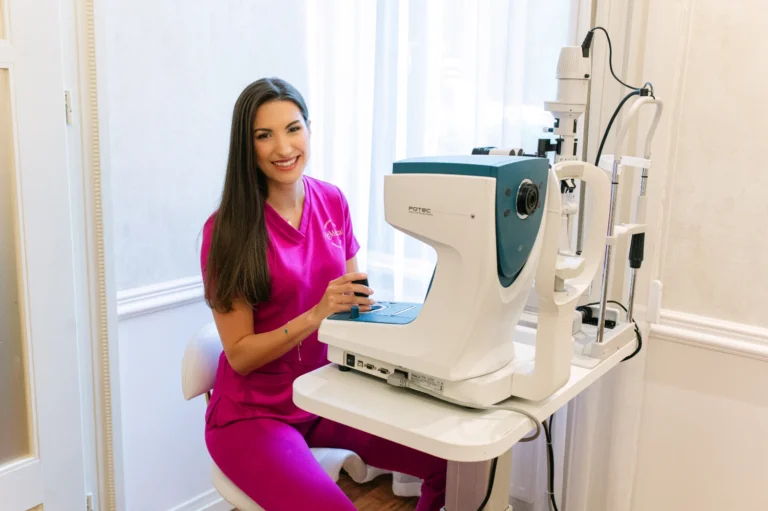

Common lesions around the eyes
Stye – Hordeolum
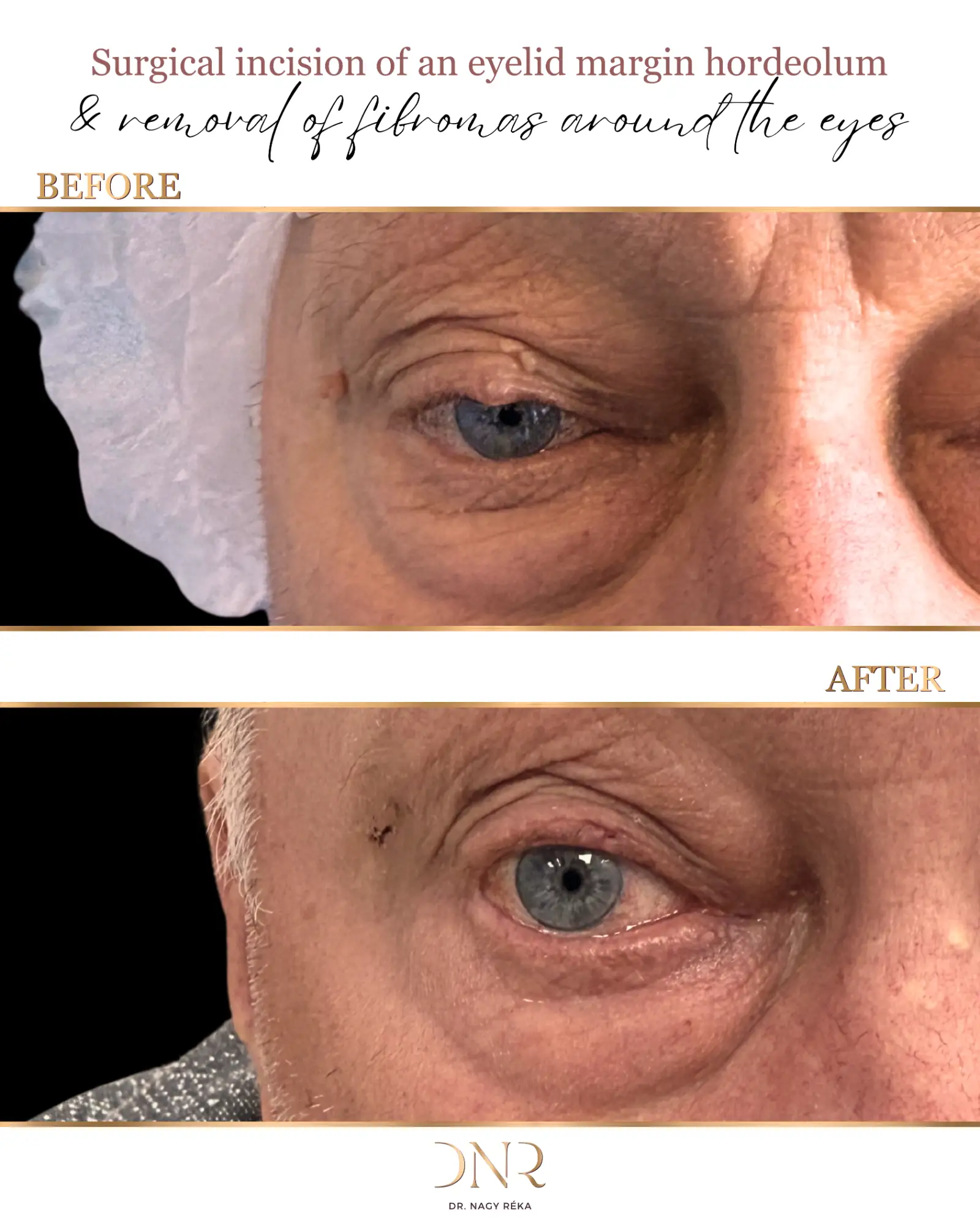
A stye is a common eyelid inflammation caused by blockage or infection of the glands in the eyelid. Typical symptoms include painful, red swelling of the eyelid, tenderness and the appearance of a small pimple-like lump. It may develop as a result of a weakened immune system.
A stye usually heals on its own within a few days or weeks. Antibiotic ointment and warm compresses may help support the healing process. In the case of persistent symptoms or recurring episodes, an ophthalmological examination is recommended.
Chalazion
A chalazion is a painless, firmer lump that may remain after a previous inflammation, such as a stye. Since it rarely disappears completely on its own, surgical opening may be recommended if it persists.
Papilloma
A papilloma is a benign, wart-like skin growth that is often attached by a thin stalk. It is usually skin-coloured or slightly lighter and grows slowly. Although it is generally harmless, it can often be bothersome during blinking, applying makeup or in cases of mechanical irritation.
Treatment: removal under local anaesthesia, either through a small incision or using electrosurgical technique.
Fibroma
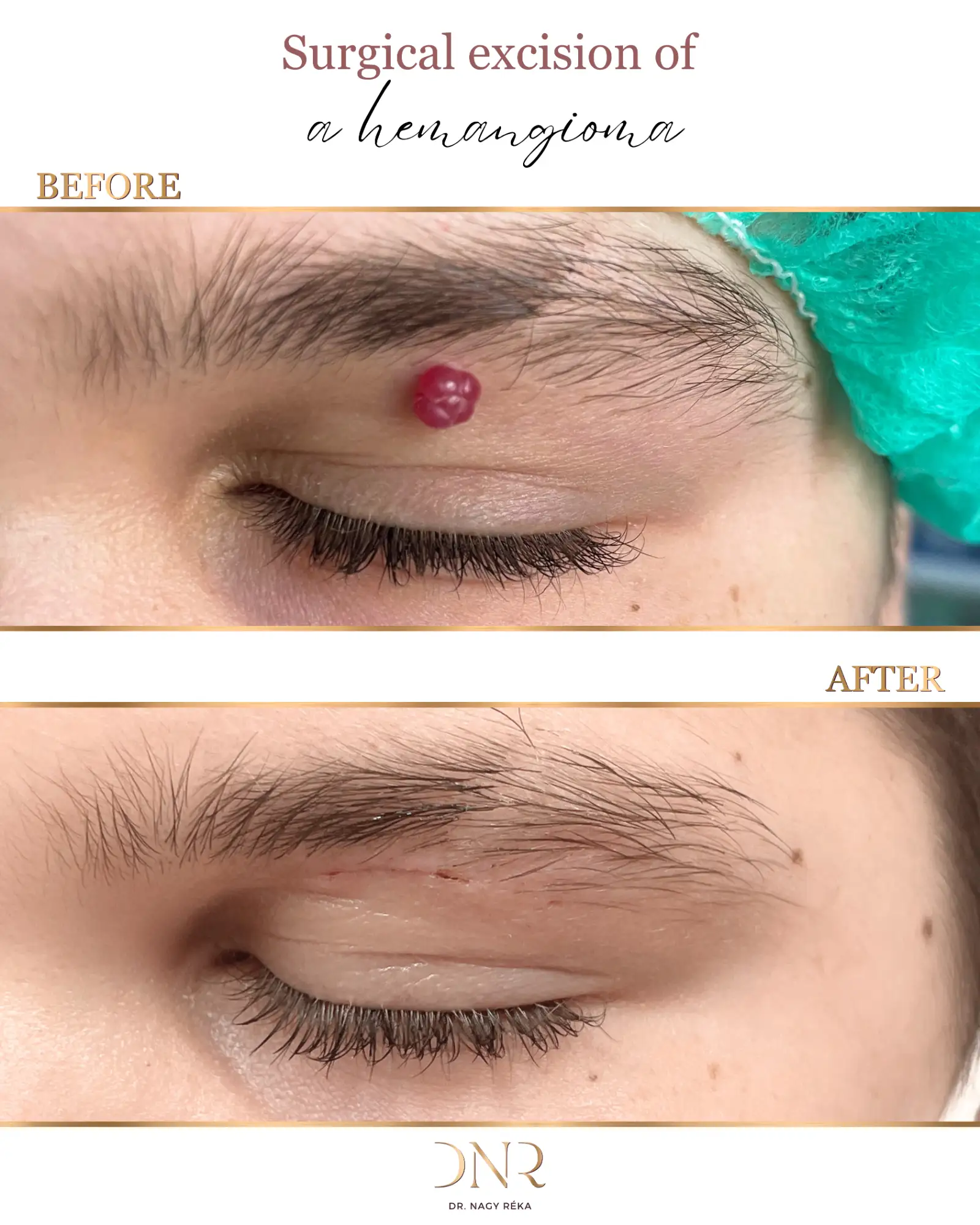
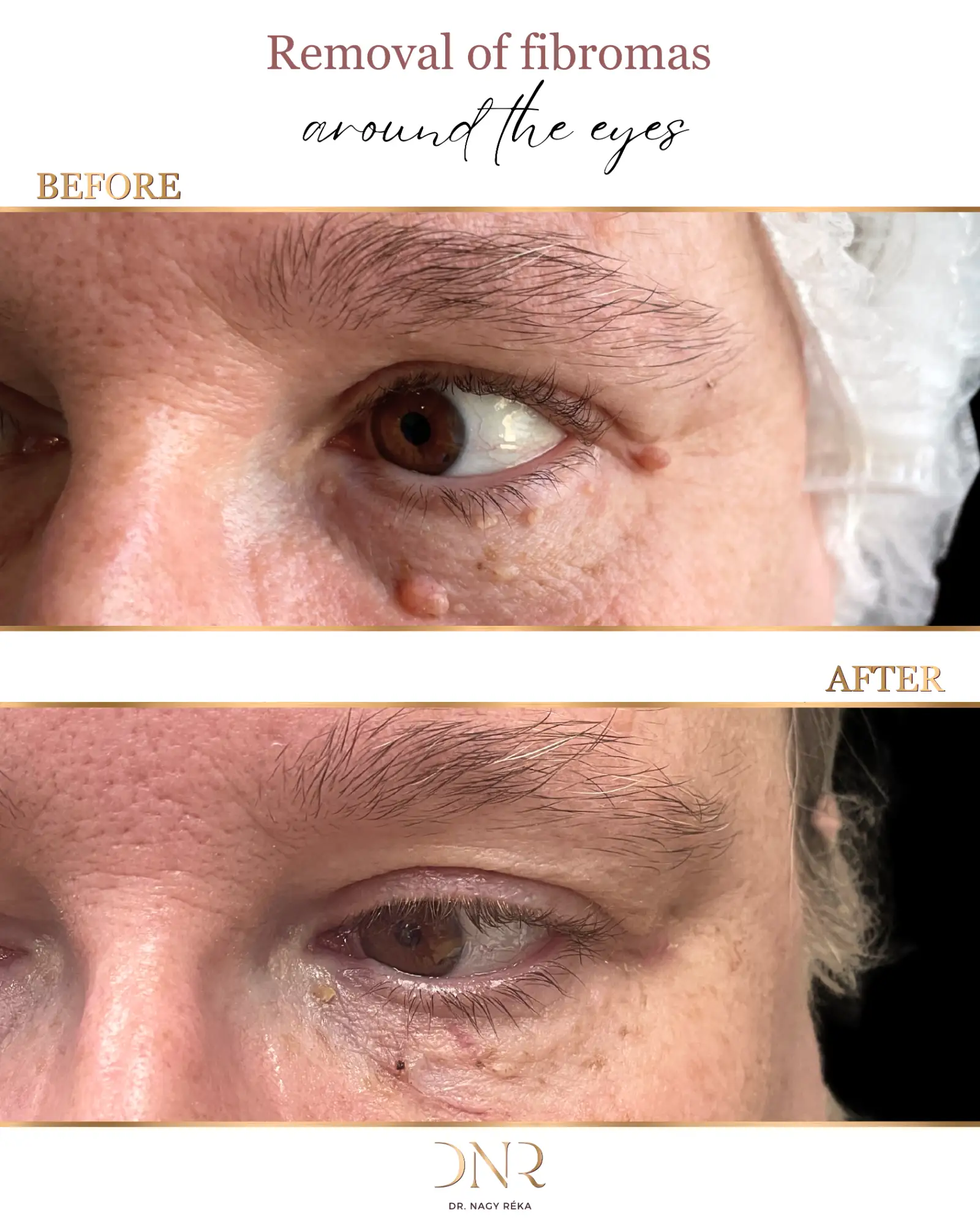
A fibroma is a soft, well-defined growth that most commonly appears on the edge of the upper or lower eyelid. It is not painful, but can easily become irritated, especially if it is affected by eyelid movement or the eyelashes.
Treatment: removal is performed by surgical excision or with an electrosurgical device.
Xanthelasma
Xanthelasma is a yellowish, flat deposit that usually appears on the inner side of the eyelids, often symmetrically. Although benign, it can be aesthetically disturbing for many patients. It may be associated with a metabolic disorder, such as elevated cholesterol levels, and may often recur if the underlying cause is not addressed.
Treatment: removal of the plaques using surgical or specialised techniques.
Eyelid cysts
These are fluid-filled sacs that may occur on or beneath the eyelids. They are often translucent, sometimes whitish in colour, and may cause a foreign-body sensation or irritation.
Treatment: removal or incision of the cyst.
Naevus on the eyelid
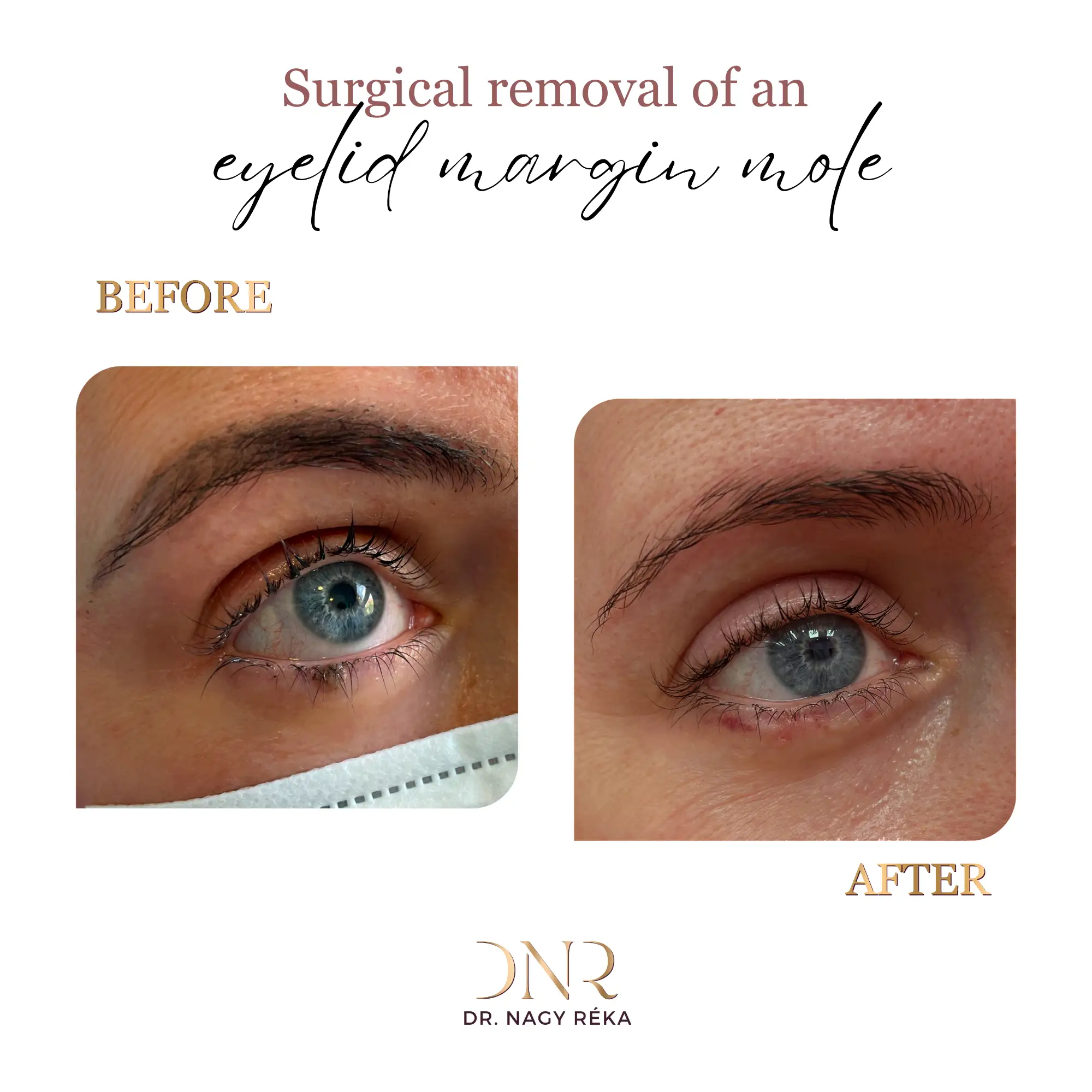
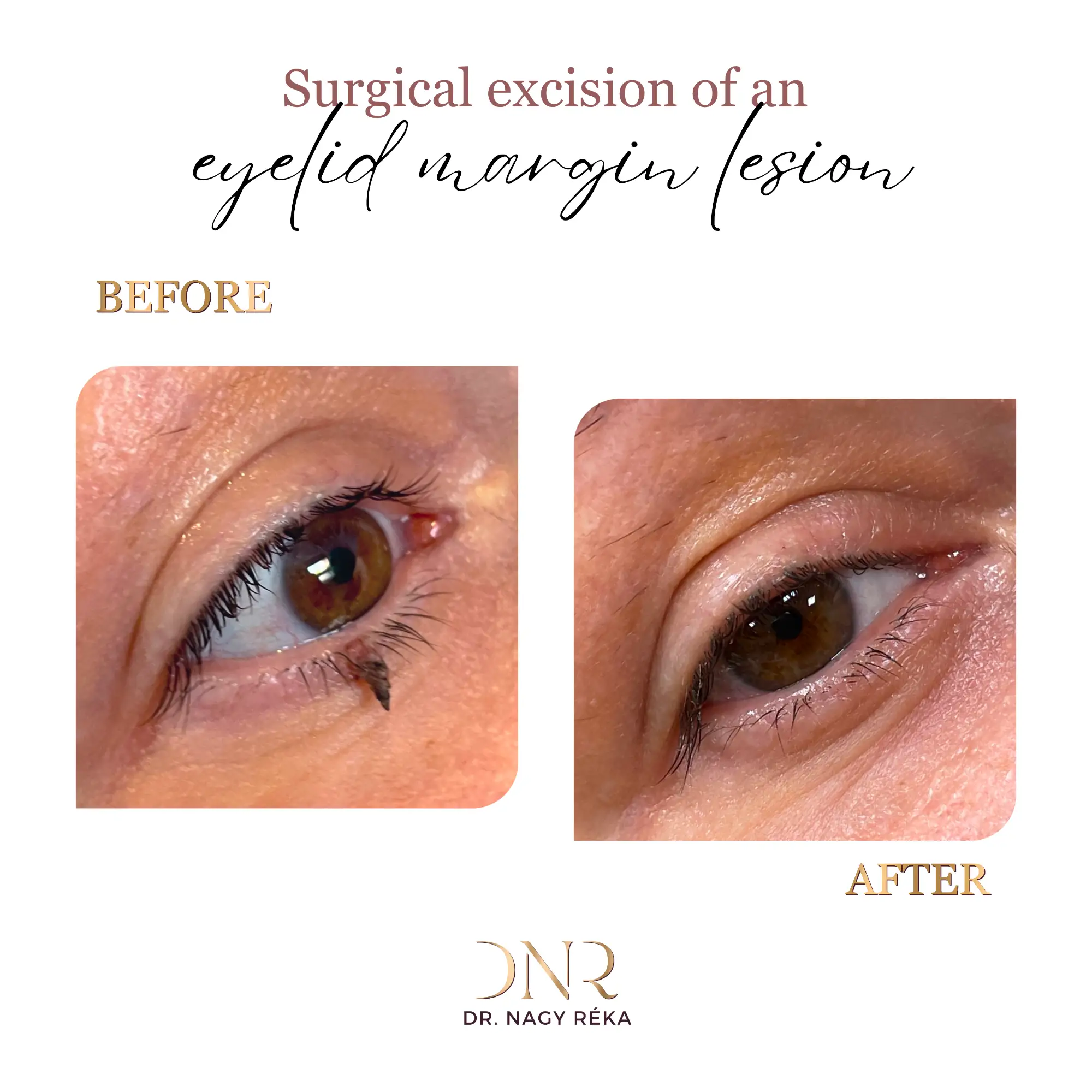
Pigmented lesions appearing on the eyelid are usually benign. Since the eye area is a highly visible aesthetic region, many patients request their removal. A specialist examination is required to determine whether the mole can be operated on and which method is most appropriate.
Treatment: surgical excision, with histological examination if necessary.
Gentle procedures in a safe environment
Most minor procedures around the eyes can be performed under local anaesthesia and take only a short time. We use modern, precise techniques to minimise scarring and recovery time. Before the procedure, each patient receives an individual examination and detailed information about the treatment process and expected healing.

Frequently asked questions – minor eyelid procedures
What types of conditions are treated with minor eyelid surgery?
The most common include papillomas, fibromas, xanthelasma, chalazion (residual styes), cysts, and eyelid moles. Most are benign but may require removal for aesthetic or functional reasons.
Is the procedure painful?
All procedures are performed under local anesthesia, making them completely painless. Patients may feel slight pressure or pulling.
How long is the recovery after papilloma or fibroma removal?
Healing is usually quick. The area typically settles within a few days with minimal swelling or redness. Full recovery takes about 1–2 weeks.
How is xanthelasma removed?
Removal is performed either surgically or with specialized techniques, depending on the size and location. A personal consultation is necessary to determine the safest and most aesthetic approach.
When is chalazion removal recommended?
If the lump does not resolve after several weeks or months, or causes discomfort, surgical removal is recommended. A small incision effectively resolves the issue and helps prevent recurrence.
Can eyelid moles be safely removed?
Yes, in most cases they can be safely excised. During consultation, the lesion is examined and, if necessary, sent for histological analysis. Due to the aesthetic sensitivity of the area, we use highly precise techniques.
Will there be scarring?
Eyelid skin heals exceptionally well, and scars are usually barely visible. With precise techniques, scarring is minimized.
When are final results visible?
The treated area improves within a few days, but final results develop over 4–6 weeks as the skin smooths and heals.
Is a follow-up appointment necessary?
Yes, in most cases we recommend a short follow-up after 1–2 weeks to monitor healing and provide additional care instructions if needed.
How can patients book a consultation?
Appointments can be scheduled by phone (+36 30 615 1177) or email (info@remedicalklinika.com
). During the consultation, we assess the condition and recommend the safest and most effective treatment method.